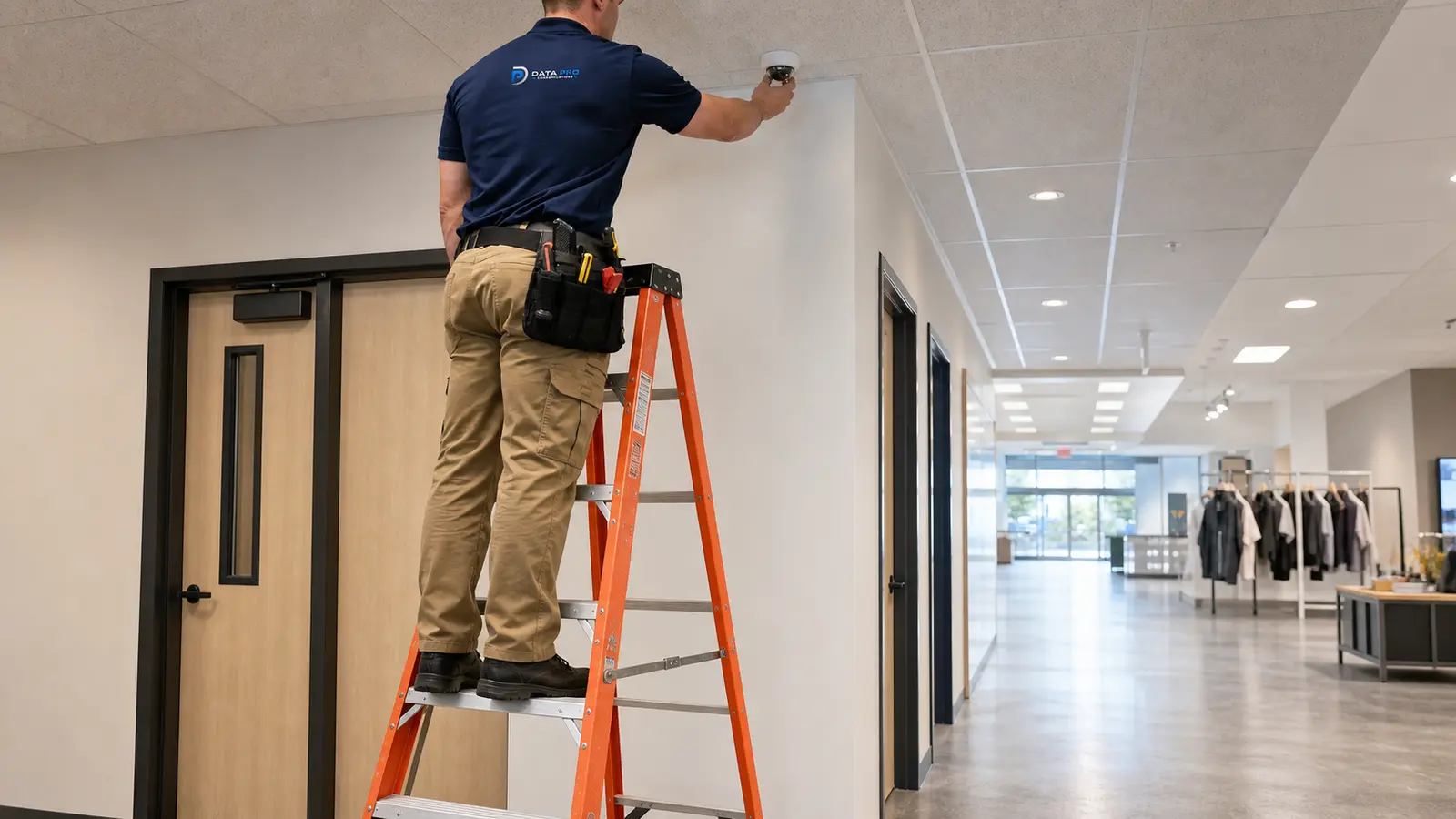
Commercial Security Cameras
Plan camera views, recording, remote access, storage, power, network capacity, and retention around the property’s operational needs.
Commercial and Industrial Connectivity, Security, and Entry Infrastructure
Data Pro Communications supports Mulberry commercial and industrial operations with coordinated low-voltage systems that connect facilities, secure critical areas, organize communications infrastructure, and improve controlled entry. Projects can include structured cabling, fiber, networks, surveillance, access control, intercom, and supporting documentation.
For facilities with yards, production areas, warehouses, offices, remote structures, gates, and long cable distances, the right backbone and pathway strategy is essential. We plan system integration around operational continuity, environmental conditions, maintainability, and future expansion without replacing the role of dedicated industry or service pages.
Mulberry has a strong industrial identity tied to phosphate, energy, manufacturing, rail, logistics, and supporting commercial activity. Facilities in and around the area may include large footprints, outdoor assets, heavy equipment movement, detached buildings, controlled yards, and challenging distances. These conditions often call for fiber backbones, resilient network design, carefully placed security devices, and documented access workflows.
Our scope can combine physical security, controlled access, communications, connectivity, pathways, testing, and documentation so that owners and managers receive a maintainable system rather than isolated device installations.
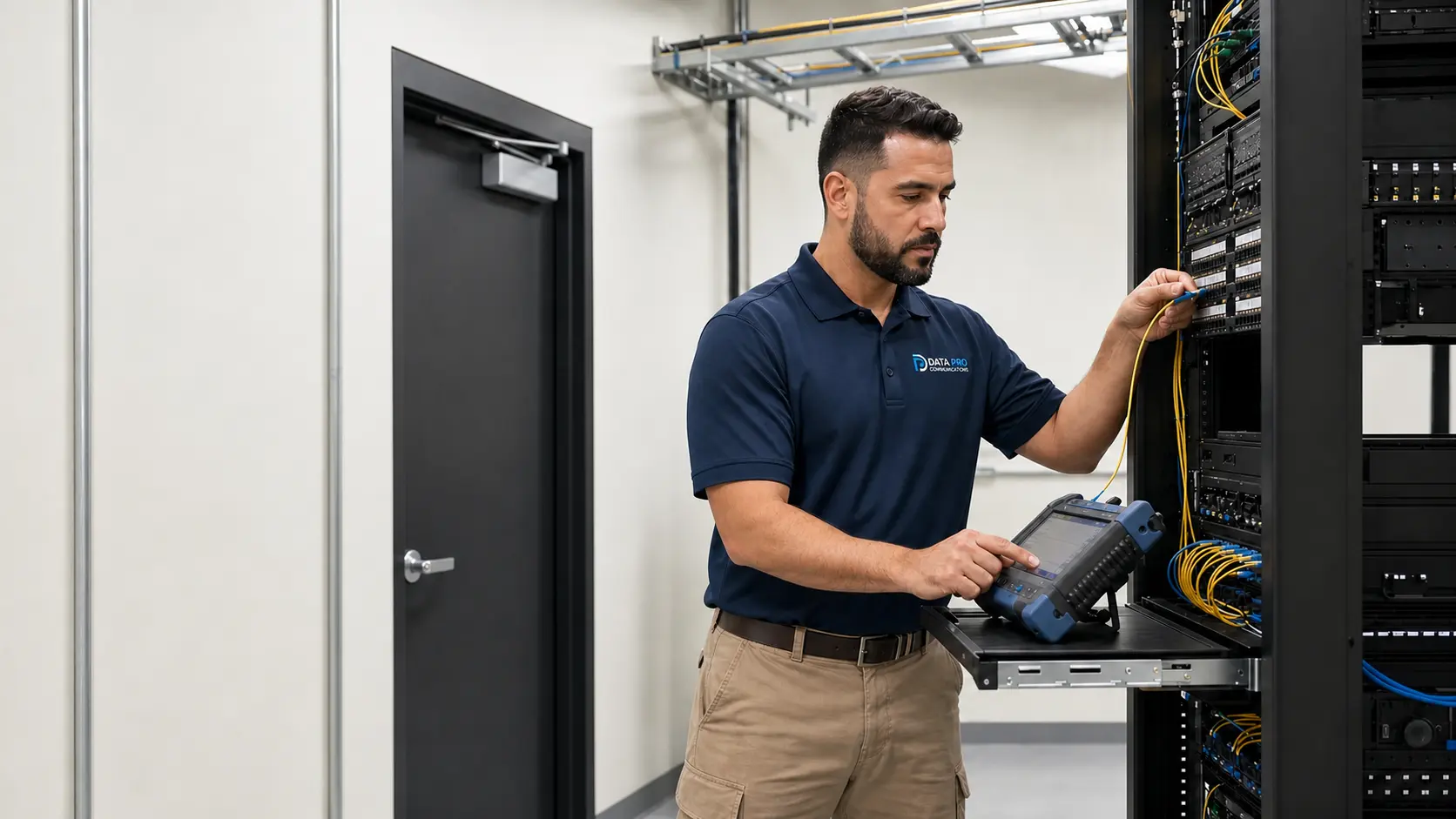
Plan camera views, recording, remote access, storage, power, network capacity, and retention around the property’s operational needs.
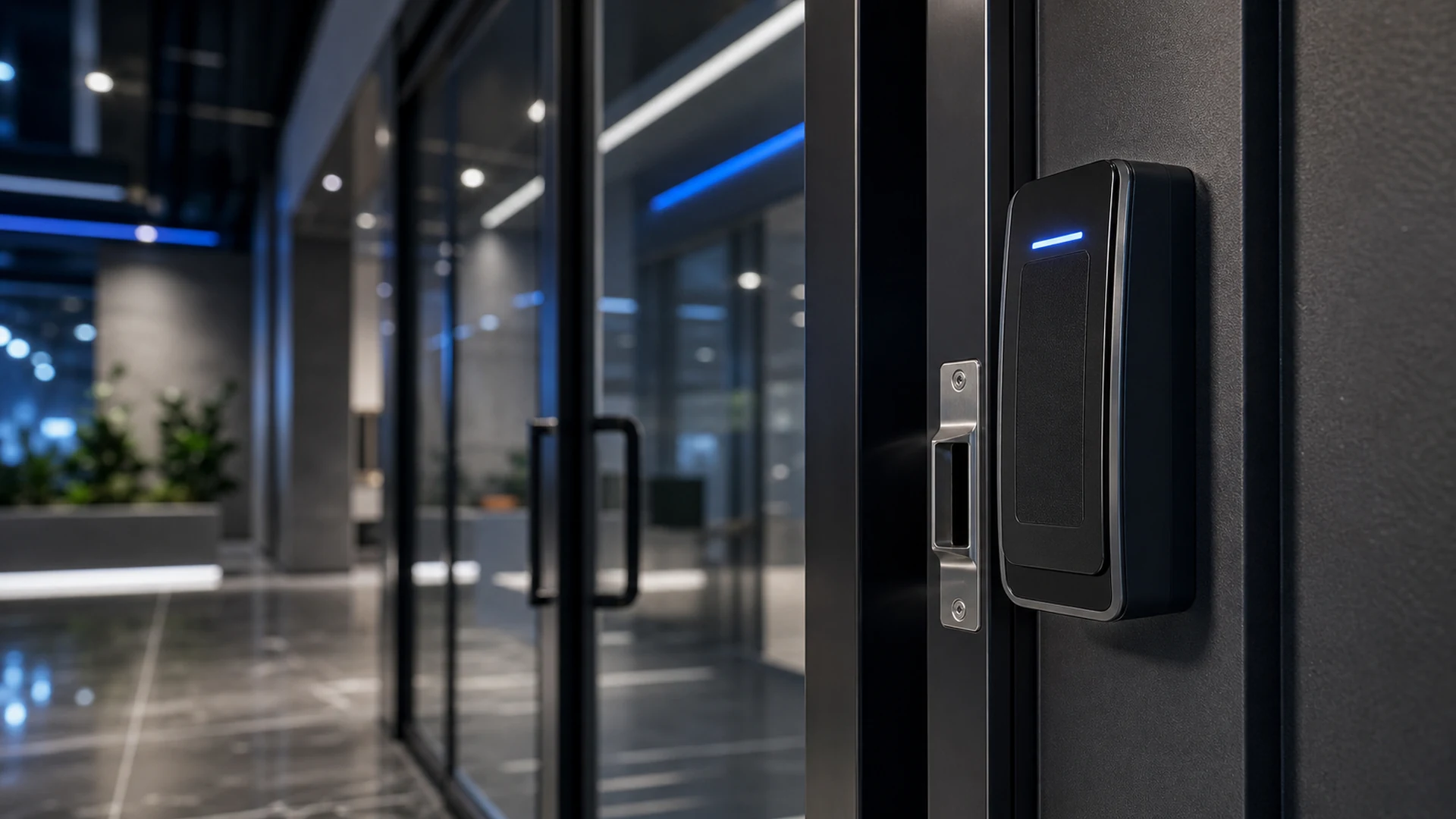
Coordinate credentials, readers, door interfaces, schedules, audit trails, and controlled-entry workflows.
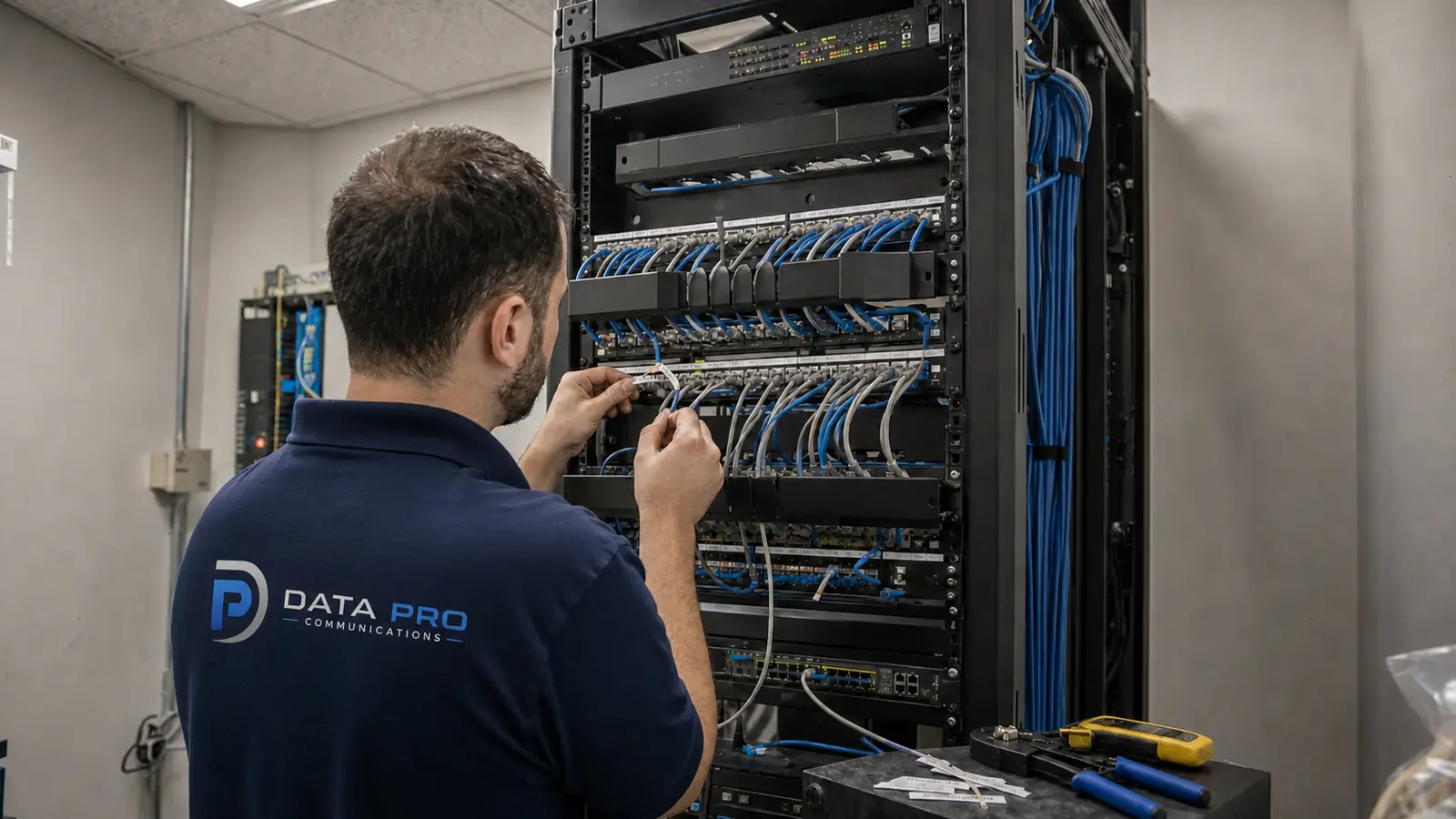
Install organized, labeled copper cabling for data, voice, wireless, cameras, access, and connected systems.
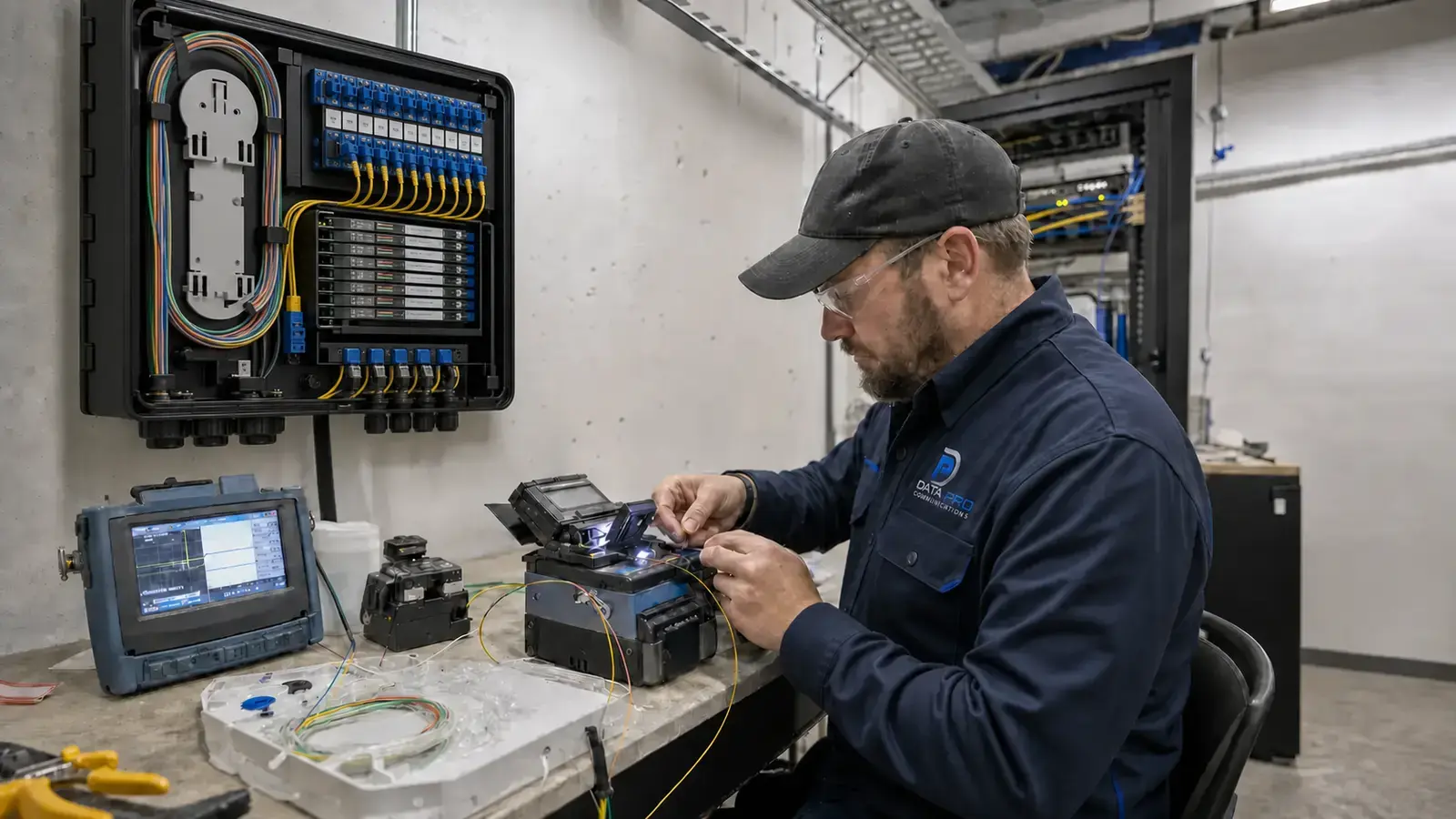
Build high-bandwidth backbones for long distances, building links, and scalable network cores.
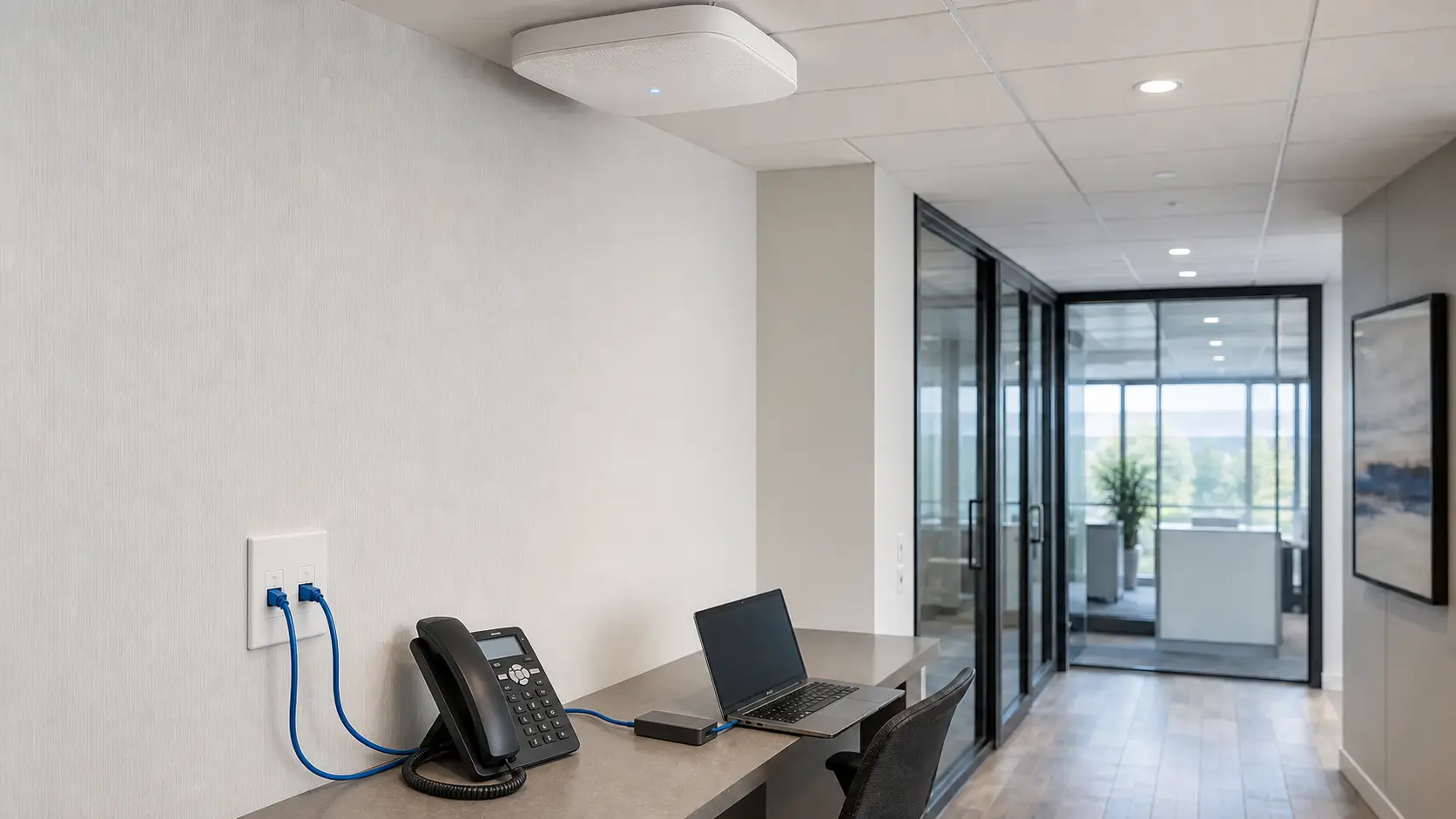
Plan racks, switching, PoE, uplinks, wireless connectivity, segmentation, and device management.
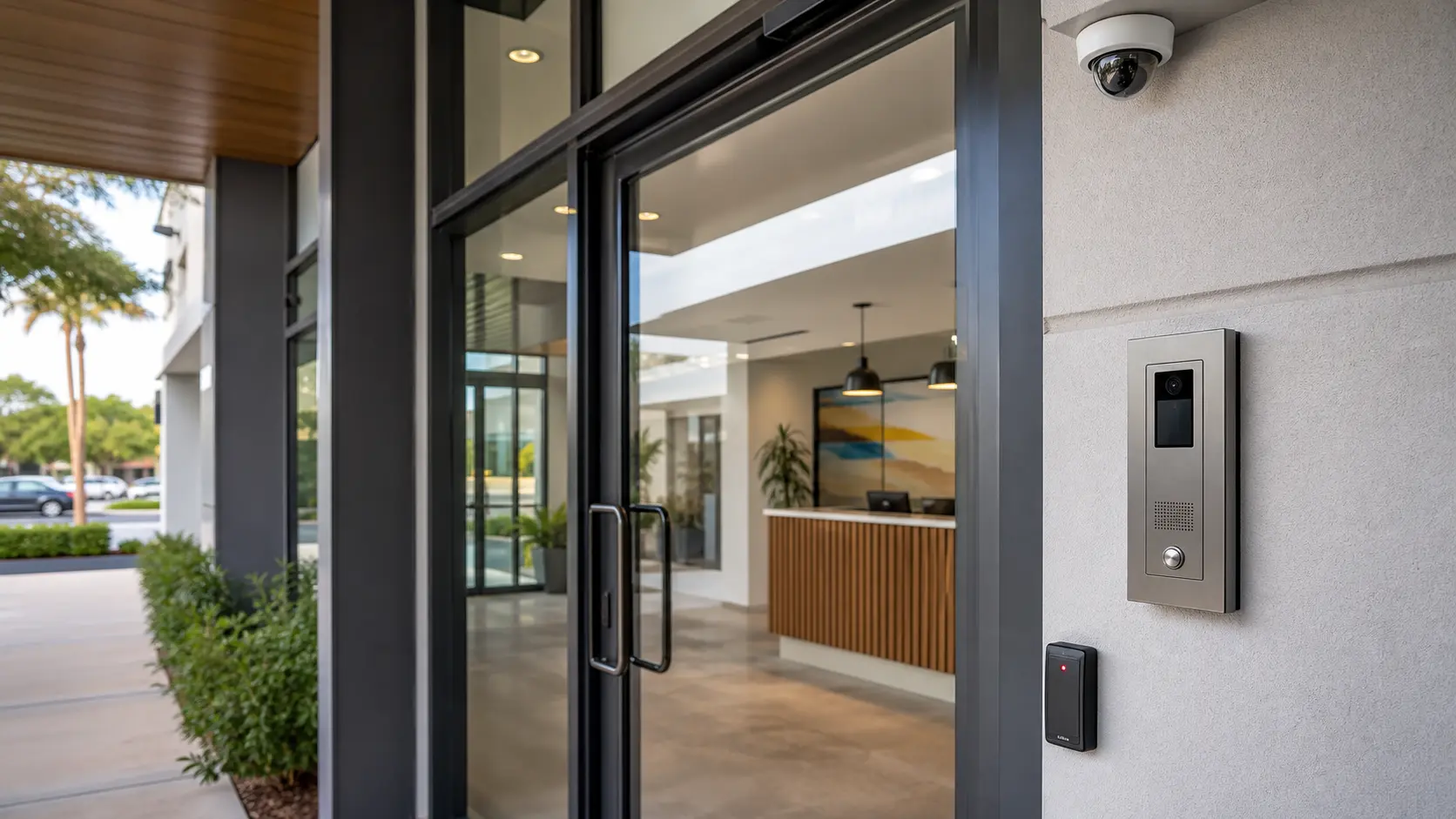
Support visitor communication, door or gate release, and coordinated entry workflows.
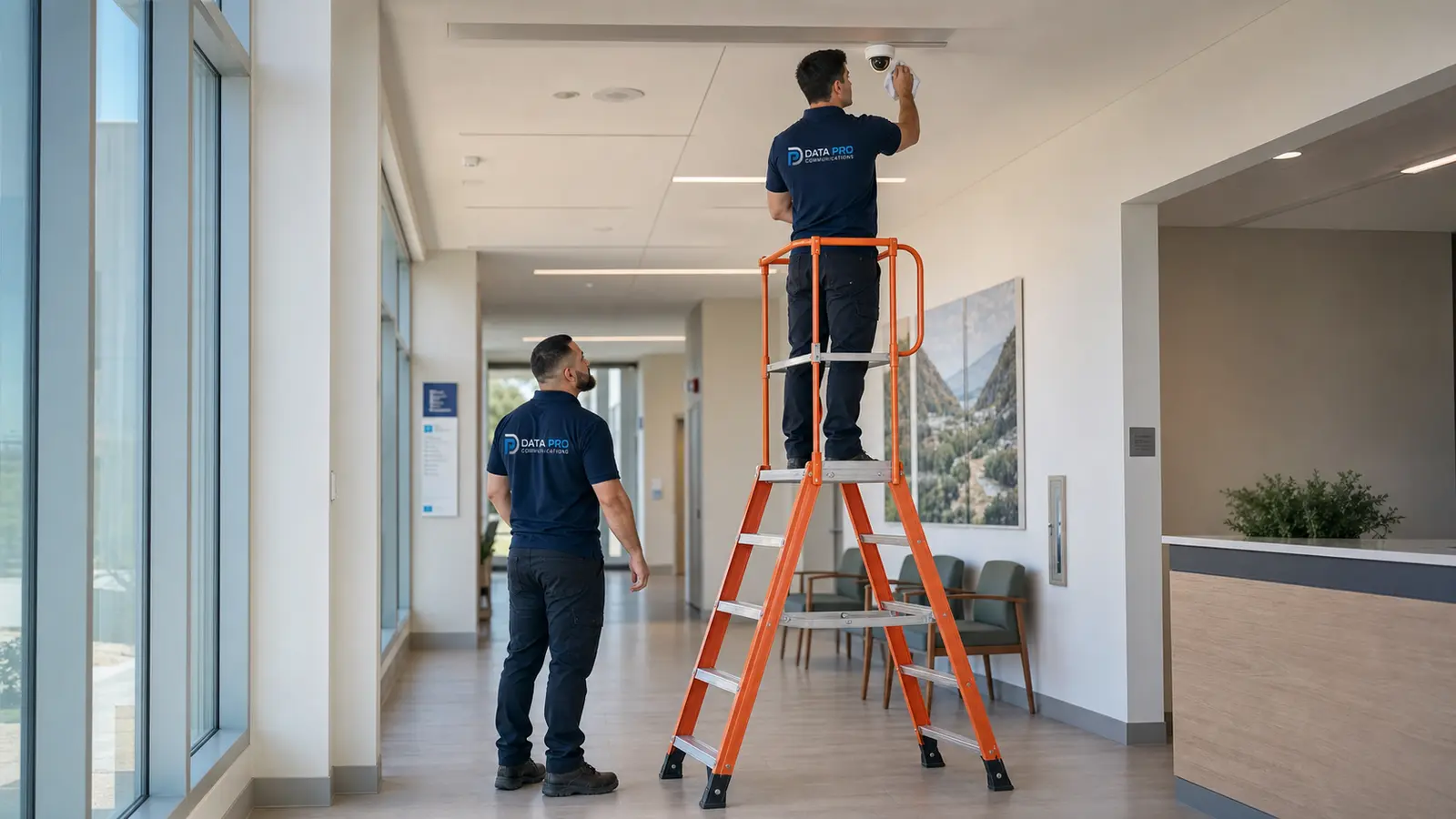
Troubleshoot supportable systems, repair infrastructure, replace failed devices, and plan lifecycle upgrades.
A typical property plan may combine copper and fiber backbones, managed network equipment, wireless coverage, cameras, recording, access-controlled doors or gates, intercom stations, rack organization, testing, labeling, and documentation. Final recommendations depend on survey findings and operational requirements.
Review pathways, telecom spaces, power, mounting, distances, sequencing, and future capacity.
Coordinate compatible security, network, access, and communications components into one operational plan.
Provide labeling, test results, device schedules, as-built notes, and turnover records appropriate to scope.
Define property use, stakeholders, current problems, desired outcomes, and timing.
Review pathways, spaces, distances, doors, gates, coverage, network conditions, and constraints.
Coordinate system categories, scope boundaries, equipment, labor, testing, documentation, and sequencing.
Install approved infrastructure and devices while coordinating access, safety, and active operations.
Verify performance, label components, document the system, and provide handoff information.

We support industrial plants, warehouses, manufacturing and fabrication properties, service yards, logistics locations, fleet and rail-support sites, commercial offices, and mixed office-shop-yard environments.
Fiber supports long distances, high bandwidth, building-to-building links, electrical isolation, and reliable backbone connectivity in environments where copper limits, interference, or large site footprints create challenges.
Yes. The design can separate office, warehouse, production-support, wireless, camera, access, and industrial-edge requirements while maintaining consistent labeling, pathways, racks, and documentation.
Access control can manage perimeter gates, employee entrances, restricted rooms, offices, storage areas, and other controlled openings using credentials, schedules, audit trails, and integrations appropriate to the selected platform.
Yes. Depending on distance and conditions, fiber, managed switching, outdoor-rated enclosures, surge protection, PoE design, wireless bridges, and other methods may be used to connect remote structures and field devices.
Cameras can support perimeter visibility, gates, loading areas, yards, entrances, process-support areas, and incident review, but they should be designed together with networking, storage, access control, lighting, and operational workflows.
Yes. Gate and entrance intercoms can support visitor communication and controlled release when compatible power, communications, network, operator, and access-control interfaces are available.
Planning considers operating hours, safety requirements, escorts, access restrictions, shutdown windows, equipment movement, elevated work, environmental exposure, and coordination with site management or contractors.
Yes. Backbone, telecom rooms, critical doors, gates, camera zones, wireless coverage, and documentation can be prioritized in phases while maintaining a consistent long-term architecture.
The survey reviews distances, pathways, buildings, telecom rooms, network topology, door and gate conditions, outdoor exposure, mounting locations, power, access restrictions, safety requirements, and operational priorities.
Closeout can include copper or fiber test results, cable and device labels, rack and port schedules, equipment lists, configuration records, as-built notes, system naming, and identified future-capacity items.
Requests are coordinated through the Lakeland office. Scope, equipment, site access, safety requirements, urgency, travel, operating windows, and material needs are reviewed before scheduling.
Data Pro Communications provides commercial low-voltage systems integration for Mulberry and surrounding Polk County service areas from our Lakeland office.